Peachtree City Pool Removal & Site Engineering

Specialized institutional-grade pool demolition for Planterra Ridge, Braelinn, and Kedron estates. Navigating the golf cart path logistics and Fayette County regulatory landscape.

Request Site Audit

The Golf Cart Path Logistics Standard

Peachtree City presents a unique logistical challenge: Narrow access and protected golf cart path infrastructure. Many properties in the Planterra Ridge and Braelinn Village area have pool footprints that are inaccessible by standard 20-ton tri-axle dump trucks without risking $10,000+ in damages to municipal paths or residential irrigation systems.

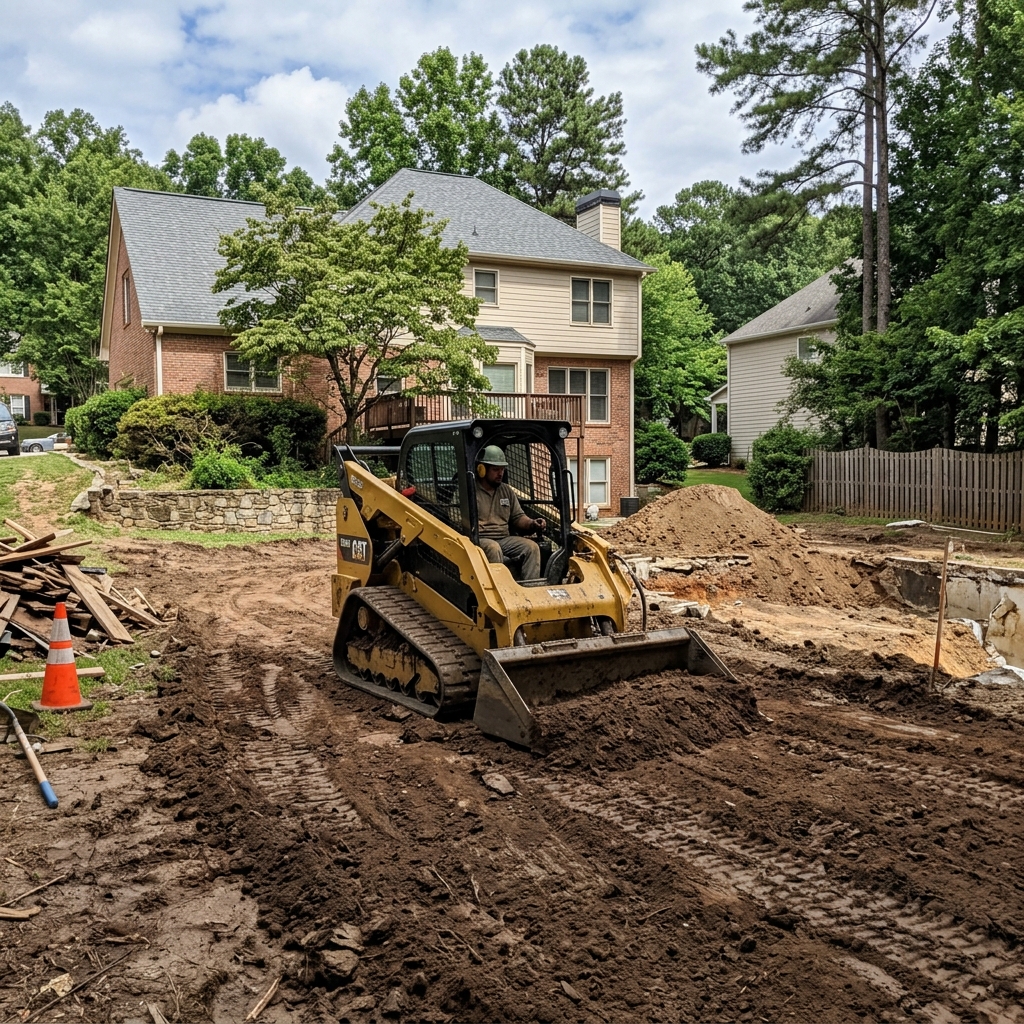
Our Peachtree City protocol focuses on Low-Impact Extraction. We utilize compact rubber-tracked loaders and specialized polymer ground mats (AlturnaMATS) to ensure that the heavy machinery load is distributed safely across residential lawns and adjacent golf cart path buffers. We are the only regional firm with a dedicated "Cart-Path Ingress Plan" verified for Fayette County compliance.

Institutional-Grade Protection

  • ✓ Path Buffer Preservation
  • ✓ Fayette County E&S Compliance
  • ✓ Utility Mapping & Protection
Peachtree City Site Preparation

The Peachtree City Restoration Protocol 2026

In the Peachtree City market, we prioritize Watershed Stewardship and Long-Term Property Value. The aging concrete shells found in the original villages—often dating back to the late 1970s and 1980s—were installed without modern hydrostatic relief valves. Over decades, this leads to significant groundwater pressure build-up, causing severe cracking and subterranean soil voids. Simply filling these old shells with "free dirt"—as many budget contractors do—is a direct recipe for a Geotechnical Sinkhole Event within 5-10 years.

Geotechnical Hierarchy: The Engineering-Grade Backfill

Our "F1 Mechanic" approach to Fayette County site restoration follows a strict geotechnical hierarchy designed for the local micaceous silt substrate:

  • Hydraulic Perforation: We utilize 1,500lb hydraulic breakers to create 18-inch relief holes every 36 inches on center through the gunite floor. This ensures that the old pool basin cannot trap groundwater and create a "subterranean lake" that would liquefy the backfill.
  • The "Surgical Beam" Extraction: We remove the top 36 inches of the pool shell (coping, tile, and bond beam) and export it from the site. We never bury visible debris near the surface horizon—a practice that would lead to future sinkholes and property disclosure liabilities.
  • Tiered Lift-Based Compaction: Certified structural fill is added in strictly monitored 6-inch "lifts." Each lift is mechanically compacted with a high-frequency vibratory trench roller. We do not rely on "gravity packing," which is the primary cause of settling in Peachtree City backyard restorations.

ROI and Marketability: Remediating the "Aging Liability" Stigma

As of 2026, Peachtree City remains a primary target for corporate relocations. These buyers are actively avoiding properties with "Aging Liability Pools"—pools that are 25+ years old and represent a constant threat of a $20,000 liner or equipment failure. Recent appraisal data in Kedron shows that homes with professionally removed pools and restored flat lawns have a 300% larger "Buyer Pool" and spend 35% less time on the market. By removing the shell and providing a certified site closure, you effectively transform a maintenance-heavy liability into a high-value building-ready asset.

Regulatory Guidance: Fayette County & Peachtree City Permits

Peachtree City properties fall under the dual jurisdiction of Peachtree City Planning & Zoning and Fayette County Environmental Health. We handle the entire administrative lifecycle: the Demolition Permit, the Septic Clearance Affidavit (if applicable), and the Final Closeout Inspection. We ensure that your property deed reflects a clean "site restored" status, an essential document for future real estate transactions that eliminates any potential "buyer friction" regarding buried infrastructure.

Tree Canopy Conservation Protocols

Peachtree City is famous for its dense, mature tree canopy. Removing a pool often requires navigating the Root Protection Zones of 50-year-old oaks and pines. Our team utilizes Air-Spade Technology to locate critical roots before machinery is deployed, and we utilize temporary mulch buffers to prevent soil compaction within the drip line of protected trees. This ensures that your pool removal does not result in the accidental death of your property's most valuable landscape assets.

Hydrological Engineering: Managing Runoff in Fayette County

The final grading of a Peachtree City lot is critical. We establish a Subterranean Drainage Swale pattern that directs all surface water away from your home's foundation and toward established municipal drainage points. This prevents the "ponding" issues that often occur when inexperienced contractors flatten a site without understanding the local topography. Our final finish is Laser-Graded to within 1-inch of precision, preparing the ground for high-performance TifTuf Bermuda sod.
Watershed Stewardship: The Flint River Standard

Properties in Peachtree City and Tyrone are topographically linked to the Flint River Basin. Every pool removal project we execute is treated as a high-stakes environmental event. We utilize Zero-Turbidity Protocols to ensure that zero sediment or pool-water contaminants exit your property during the demolition phase, protecting the local aquatic ecosystem and ensuring 100% compliance with Georgia's strict environmental laws.

Advanced Peachtree City Erosion Control BMPs

Our Fayette County environmental package includes technical measures that go far beyond the industry standard:

  • Type C Silt Fencing (Dual Row): For properties with a grade exceeding 5%, we install dual rows of wire-backed silt fencing. This creates a redundant barrier that prevents Peachtree City's fine silts from entering the municipal storm system.
  • Synthetic Buffer Blankets: We utilize coconut fiber blankets on all freshly graded slopes. These blankets provide immediate structural stability, preventing "rill erosion" during the 30-day window before sod root establishment.
  • Flocculant Socks: We install temporary filtration "socks" at the lowest point of the project ingress. These socks contain advanced flocculants that clarify any surface runoff, ensuring that only clear water enters the Fayette watershed.

The Peachtree City Closeout Binder: Engineering Verification

Documentation is the difference between a "demolition project" and a "verified site improvement." Every Peachtree City project we complete includes a comprehensive Project Closeout Binder. This document is your property's Engineering Passport, proving to future buyers, inspectors, and insurance adjusters that the work was performed to institutional standards.

Institutional-Grade Deliverables

  • Certified Compaction Reports: Nuclear density test results showing 95% Modified Proctor density at multiple depths.
  • Site Drainage Map: A post-project survey showing the new subterranean hydrology patterns and grading swales.
  • Soil Certification: Official documentation of the Certified Structural Fill grade used for the project.
  • Peachtree City Final Affidavit: The signed municipal closeout document, officially removing the pool from your property's permanent record.

By providing this level of documentation, we eliminate the "buried liability" stigma and ensure your property maintains its premium value in the competitive Fayette County market.

Logistical Excellence: Managing Cart-Path Community Constraints

Removing a pool in a high-density community like Peachtree City requires more than just machinery; it requires a sophisticated Logistical Master Plan. Neighbor relations and municipal compliance are just as important as the excavation itself.

The "Peachtree City" Protocol

  • Noise Mitigation: We utilize Tier 4 Final low-emission machinery that operates at significantly lower decibel levels than older equipment. Our projects only utilize high-impact hammers during specific municipal "Work Windows."
  • Dust Suppression: We utilize high-pressure misting systems during the concrete demolition phase to ensure that zero dust migrates to neighboring properties—a key requirement for maintaining HOA harmony.
  • Asphalt & Path Protection: Every delivery of structural fill is staged to ensure that heavy trucks do not dwell on residential asphalt or municipal cart paths. We utilize rubber-tracked equipment to navigate narrow lots, ensuring no scarring or damage to the municipal substrate.

By choosing an engineering-led partner, you are securing a professional project that respects your neighbors and protects Peachtree City's unique aesthetic standards. Contact our Fayette County technical team today to schedule your comprehensive site audit.

Septic System Stewardship: Protecting Fayette Infrastructure

In many of the older, established estates along Robinson Road and Redwine Road, septic systems remain the primary wastewater solution. When removing a pool, the single greatest risk to property value is the accidental compaction of the septic drain field. Standard heavy machinery can crush lateral lines or "glaze" the soil substrate, leading to a permanent system failure that can cost $20,000+ to remediate.

The Peachtree City Septic Protocol

Our engineering team treats your septic infrastructure as a No-Go Zone. Our protocol includes:

  • Site Mapping & Dye Testing: We utilize Fayette County Environmental Health records and on-site dye testing to identify the exact boundaries of your primary and secondary drain fields.
  • Bridge-Deck Ingress: If the only access path to the pool requires crossing a septic line, we install structural steel bridge plates that span the pipe's trench, ensuring zero vertical load is transferred to the infrastructure.
  • Vacuum Excavation: Near sensitive septic components, we utilize hydro-excavation (vacuum) to expose lines without the risk of mechanical strikes from an excavator bucket.

The Physics of Soil: Managing Fayette's Micaceous Silt

The soil profile in Peachtree City, particularly near the Flint River Basin, contains high concentrations of Mica. This mineral gives the soil a "greasy" feel and makes it notoriously difficult to compact. Standard plate compactors used by general landscapers are insufficient for this substrate; they merely "vibrate" the surface without achieving deep-grain interlocking.

Advanced Compaction Strategies

  • Dynamic Kneading Action: We utilize Sheepsfoot Rollers and high-frequency trench rollers that apply a "kneading" force. This breaks down the mica plates and forces the soil particles together, achieving a density that is impossible with standard equipment.
  • Moisture-Optimized Fill: Soil density is a function of Optimum Moisture Content. We monitor the hydration of our fill material in real-time, adding water or aerating the soil as needed to hit the "sweet spot" where maximum compaction is achieved.
  • Verification Benchmarking: We perform manual "T-probe" tests every 2 feet of fill to ensure zero subterranean voids are present before the next lift is added.

By applying these institutional-grade engineering principles, we guarantee that your Peachtree City property will be as stable as virgin earth. We provide a Lifetime Zero-Settling Warranty, backed by our 20-year history of site development excellence. Contact our Fayette County technical hub today to discuss your site's specific geotechnical needs.

Sustainable Reclamation: The Fayette Circular Economy

In 2026, professional pool removal in Peachtree City is an exercise in Environmental Stewardship. We don't believe in simply transporting concrete to a landfill. Instead, we utilize a circular economy approach where project byproducts are recycled into functional site components.

The Aggregate Lifecycle in Fayette County

When we perform the "Surgical Cut" of your pool's bond beam, we produce approximately 20 tons of reinforced concrete. Our sustainability protocol includes:

  • Steel Reclamation: Every linear foot of rebar is manually extracted and transported to regional Fayette metal recycling facilities, reducing the demand for virgin steel production.
  • On-Site Aggregate Utilization: Where appropriate, we crush clean concrete on-site to create #57 Recycled Stone, which we use for the primary hydraulic sink layer at the bottom of the pool shell. This eliminates the carbon footprint of several dump truck trips.
  • Organic Horizon Restoration: We amend our finish topsoil with composted organic matter from local Peachtree City landscape recyclers, ensuring your new sod has the nutrient density required for rapid establishment.

Technical FAQ: Peachtree City Estate Restoration

How do you navigate the golf cart paths during demolition?

We utilize specialized compact equipment and high-density polyethylene (HDPE) mats to bridge the paths. We coordinate with the city's public works department to ensure zero damage to the path's asphalt substrate or the adjacent grass buffers.

Can we build a new structure on the old pool site?

Yes, but only if you choose our Engineered Full Removal. We remove the entire shell and compact the backfill to 95% Modified Proctor density. We provide the certified testing data required to secure a building permit for an ADU or permanent pavilion.

What happens to the existing pool plumbing?

All plumbing is excavated and capped at the source. For septic properties, we ensure that no pool lines are left that could interfere with your septic system's primary or secondary drain fields. This is a critical step for maintaining property value in Fayette County.